
How Often to Clean Solar Panels in Arizona
Published · By Lou Flores
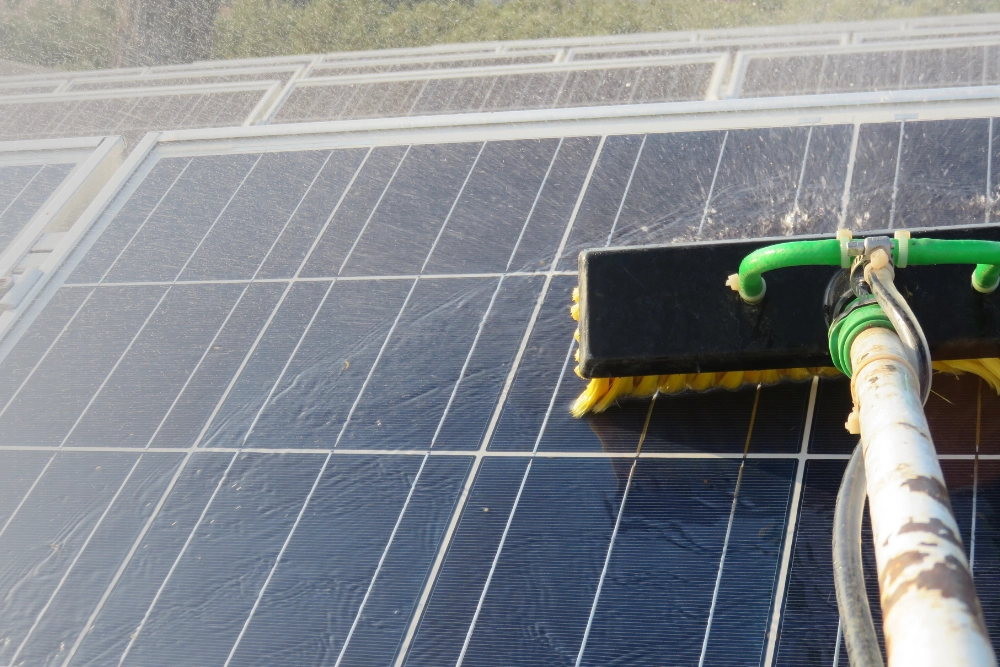
Solar panels in Arizona do not need to be cleaned on a fixed schedule. The right cleaning frequency depends on how quickly dust, pollen, dirt, and storm debris build up on your system.
Arizona’s dry climate, long stretches without rain, dust storms, monsoon activity, nearby construction, and desert landscaping can all leave residue on solar panels. Some properties may need attention sooner than others, which is why regular visual checks are often more useful than following a rigid calendar.
In this guide, we’ll explain what causes solar panels to get dirty in Arizona, the signs that cleaning may be needed, what to check after dust storms and monsoon weather, and when professional solar panel cleaning may make sense.
Why Do Solar Panels Get Dirty in Arizona?
Arizona’s desert environment can cause dust and debris to accumulate on solar panels even when they are otherwise well maintained.
Common sources of buildup include:
- Windblown dust and loose soil
- Pollen and plant debris
- Dirt from nearby construction
- Landscaping dust
- Debris carried by strong winds
- Mud or residue left after storms
- Leaves and other organic debris
How quickly panels become dirty can vary significantly from one property to another. A home near an open desert lot, active construction site, unpaved area, or heavy landscaping may experience more buildup than a property in a more developed area.
That is why solar panel cleaning frequency in Arizona is better based on actual conditions at your property rather than a one-size-fits-all schedule.
How Can You Tell When Solar Panels Need Cleaning?
You usually do not need a complicated maintenance schedule to know when your solar panels need attention. A safe visual inspection can reveal many of the most common signs of buildup.
Look for:
- A visible coating of dust
- Mud spots or streaks
- Leaves or plant debris
- Dirt collecting along panel edges
- Pollen or fine surface residue
- Sections of the array that appear noticeably dirtier than others
The key is to look for persistent buildup rather than a small amount of normal outdoor dust.
If the panels cannot be inspected safely from the ground, avoid climbing onto the roof simply to check them. Roof access, panel placement, and Arizona heat can all make DIY inspection more hazardous than it appears.
Should You Clean Solar Panels After an Arizona Dust Storm?
Not necessarily.
A dust storm is a good reason to inspect your solar panels, but it does not automatically mean they need to be cleaned afterward. Some storms may leave only a light coating of dust, while others can leave noticeable dirt, mud spots, or debris across the array.
Once conditions are safe, check the panels for:
- Heavy or uneven dust buildup
- Mud or dried residue
- Leaves and branches
- Debris caught around panel edges
- Surface dirt that remains after the weather clears
If the panels still look noticeably dirty, cleaning may be worth considering.
How Does Arizona’s Monsoon Season Affect Solar Panels?
Monsoon weather can both help and complicate solar panel maintenance.
Rain may rinse away some loose surface dust, but it does not necessarily provide a complete cleaning. When rain mixes with airborne dust, it can leave behind mud spots, streaks, or residue once the panels dry.
Strong winds can also deposit leaves, small branches, and other debris around the system.
After a significant monsoon storm, inspect the panels from a safe location and look for visible buildup. If rain has left the panels relatively clean, additional cleaning may not be necessary. If residue remains, it may be time to consider cleaning.
Is Rain Enough to Clean Solar Panels?
Rain can help remove loose dust, but it should not be treated as a substitute for cleaning in every situation.
Some types of buildup are more likely to remain after rainfall, including:
- Dried mud
- Pollen
- Water spotting
- Stuck leaves or plant material
- Dirt concentrated along panel edges
- Residue left behind after dusty weather
Instead of assuming that rain has cleaned the system, take a look once the weather clears. The condition of the panels is a better guide than the fact that it rained.
A Practical Solar Panel Maintenance Routine for Arizona
For most Arizona properties, a condition-based approach makes more sense than choosing an arbitrary cleaning date.
Inspect your solar panels periodically from a safe location and pay additional attention after:
- Dust storms
- Long periods of dry weather
- Strong winds
- Nearby construction
- Dust-producing landscaping work
- Monsoon storms
- Periods of heavy pollen or plant debris
If the panels still look relatively clean, there may be no reason to schedule cleaning simply because a certain amount of time has passed.
If you can clearly see dust, mud, pollen, or other buildup across the panels, that is a stronger indication that cleaning may be appropriate.
If your solar panels have accumulated visible dust, dirt, or storm debris, you do not have to handle rooftop cleaning yourself. Our team provides professional solar panel cleaning for homes and businesses throughout Maricopa and the surrounding Arizona communities we serve.
Call us at (480) 470-8439 or request service through our website.
Get a Free Quote
We respond same day.