
The Best Way to Clean Pavers
Published · By Lou Flores
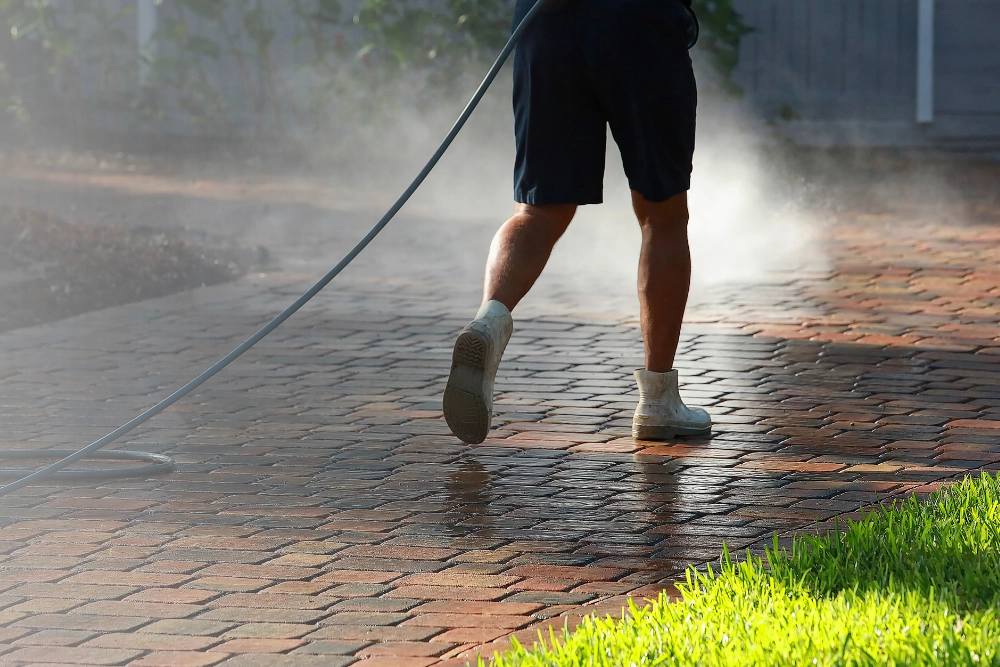
Pavers can make a driveway, patio, or walkway look polished, but dirt, dust, stains, and everyday buildup can quickly dull their appearance. The best way to clean pavers is to start with the gentlest effective method: remove loose debris, treat stains individually, use an appropriate cleaning solution, scrub problem areas when needed, and rinse the surface thoroughly.
For heavier buildup or larger paved areas, pressure washing can provide a deeper clean, but using too much pressure or the wrong technique can disturb joint material or affect the surface.
In Arizona, outdoor pavers are regularly exposed to dust, tracked-in soil, vehicle traffic, and intense outdoor conditions. At Blue Cactus Power Washing, we help property owners throughout Maricopa and surrounding communities maintain exterior surfaces, including residential pavers.
Below, we’ll walk through the safest and most effective ways to clean pavers, how to handle stains, when pressure washing makes sense, and how to keep your pavers looking cleaner for longer.
How to Clean Pavers
For routine maintenance, begin by removing as much loose material as possible before adding water or cleaning products.
Sweep the surface thoroughly so dirt, leaves, sand, and other debris do not turn into muddy residue once the area becomes wet. If weeds or loose organic material are growing between the joints, address those before washing the surface.
Once the area is clear, inspect the pavers for stains. Treating specific stains before washing the entire area is usually more effective than trying to use one cleaner for every problem.
After spot treatment, apply a cleaner suitable for the paver material, allow it to work according to the product instructions, and lightly scrub problem areas. Rinse thoroughly afterward so cleaning residue does not remain on the surface.
The goal is not to use as much pressure or chemical strength as possible. It is to use enough cleaning power to remove the buildup without unnecessarily affecting the pavers or the material between them.
Pressure Washing Pavers
Many outdoor paver surfaces can be pressure washed, but technique matters.
Pressure washing pavers can be effective for removing accumulated dirt, grime, and buildup that ordinary rinsing cannot handle. Problems can occur when excessive pressure is used too close to the surface or concentrated in one spot.
Aggressive washing can also disturb jointing material between pavers.
If you are pressure washing pavers yourself, avoid assuming that maximum pressure will produce the best result. Begin conservatively and test a small, less-visible section before cleaning the entire area.
Different paver materials and surface conditions can respond differently to pressure, which is one reason professional paver cleaning may be worth considering for older surfaces, large patios, heavily stained driveways, or areas where you are unsure how the surface will react.
What to Use to Clean Outdoor Pavers
The appropriate cleaning solution depends on the type of buildup.
For ordinary dirt, water and a mild surface-appropriate cleaner may be enough. More stubborn stains often require targeted treatment rather than stronger cleaning across the entire surface.
For example, grease or oil should generally be treated differently from dirt or organic staining. Using the wrong product can result in unnecessary discoloration or leave residue behind.
Before applying any cleaning product, check whether it is appropriate for your particular paver material. Testing it in a small area is also a sensible precaution.
Avoid combining household cleaning chemicals unless the product instructions specifically allow it. Stronger does not automatically mean safer or more effective.
Removing Stains From Pavers
The best approach is to identify the stain first.
Fresh spills should usually be addressed as soon as practical because stains can become harder to remove after they have had time to settle into a porous surface.
Loose dirt and surface residue should be removed before treating the stain so the cleaner can reach the affected area.
Apply an appropriate stain treatment, allow it enough time to work, gently agitate the area if needed, and rinse it thoroughly.
Some stains may require more than one treatment. Trying to remove a stubborn stain in a single pass with excessive pressure can cause more problems than using a controlled cleaning process.
Cleaning Pavers Without Damaging Them
The safest approach is to match the cleaning method to the surface rather than treating every paver installation the same way.
A few factors matter:
- Paver material and condition
- Age of the installation
- Type and severity of staining
- Condition of the joints
- Cleaning solution being used
- Water pressure and distance from the surface
Testing a small section first is particularly useful if you do not know how the pavers have been maintained previously.
If the surface is already damaged, loose, uneven, or deteriorating, cleaning alone will not correct the underlying issue.
How Often to Clean Outdoor Pavers
There is no single cleaning schedule that works for every property.
A lightly used backyard patio may need much less frequent deep cleaning than a driveway exposed to vehicles, tire marks, spills, and regular traffic.
In Arizona, outdoor paved surfaces can also collect dust and tracked-in soil between deeper cleanings. Regular sweeping and occasional rinsing can help prevent loose debris from becoming heavily embedded.
The best time for deeper paver cleaning is generally when routine maintenance is no longer restoring the appearance of the surface or when stains and buildup have become noticeable.
When DIY Paver Cleaning Is Enough
For light dirt and small areas, DIY maintenance may be all you need.
Professional cleaning becomes more practical when you are dealing with a larger paved area, embedded buildup, multiple types of stains, uneven results from previous cleaning, or concerns about using pressure correctly.
Professional service also removes some of the guesswork involved in deciding how aggressively to clean the surface.
The purpose of professional paver cleaning is not simply to spray the area with high-pressure water. The cleaning method should account for the surface, the type of buildup, and the condition of the paved area.
Maintaining Pavers After Cleaning
Keeping pavers clean is easier when dirt is not allowed to accumulate for long periods.
Sweep the area regularly, address spills before they settle, remove organic debris, and pay attention to staining in heavily used areas such as driveways, walkways, patios, and backyard spaces.
Routine maintenance will not eliminate the need for deeper cleaning forever, but it can help reduce the amount of buildup that has to be removed later.
Professional Paver Cleaning in Maricopa, Arizona
If your pavers have stubborn dirt, staining, or buildup that routine cleaning is not removing, our team can evaluate the surface and recommend an appropriate cleaning approach.
Blue Cactus Power Washing provides paver cleaning for property owners in Maricopa and service areas throughout the Valley. We are licensed, bonded, and insured.
You can explore our paver cleaning services or call (480) 470-8439 to discuss your property.
Get a Free Quote
We respond same day.